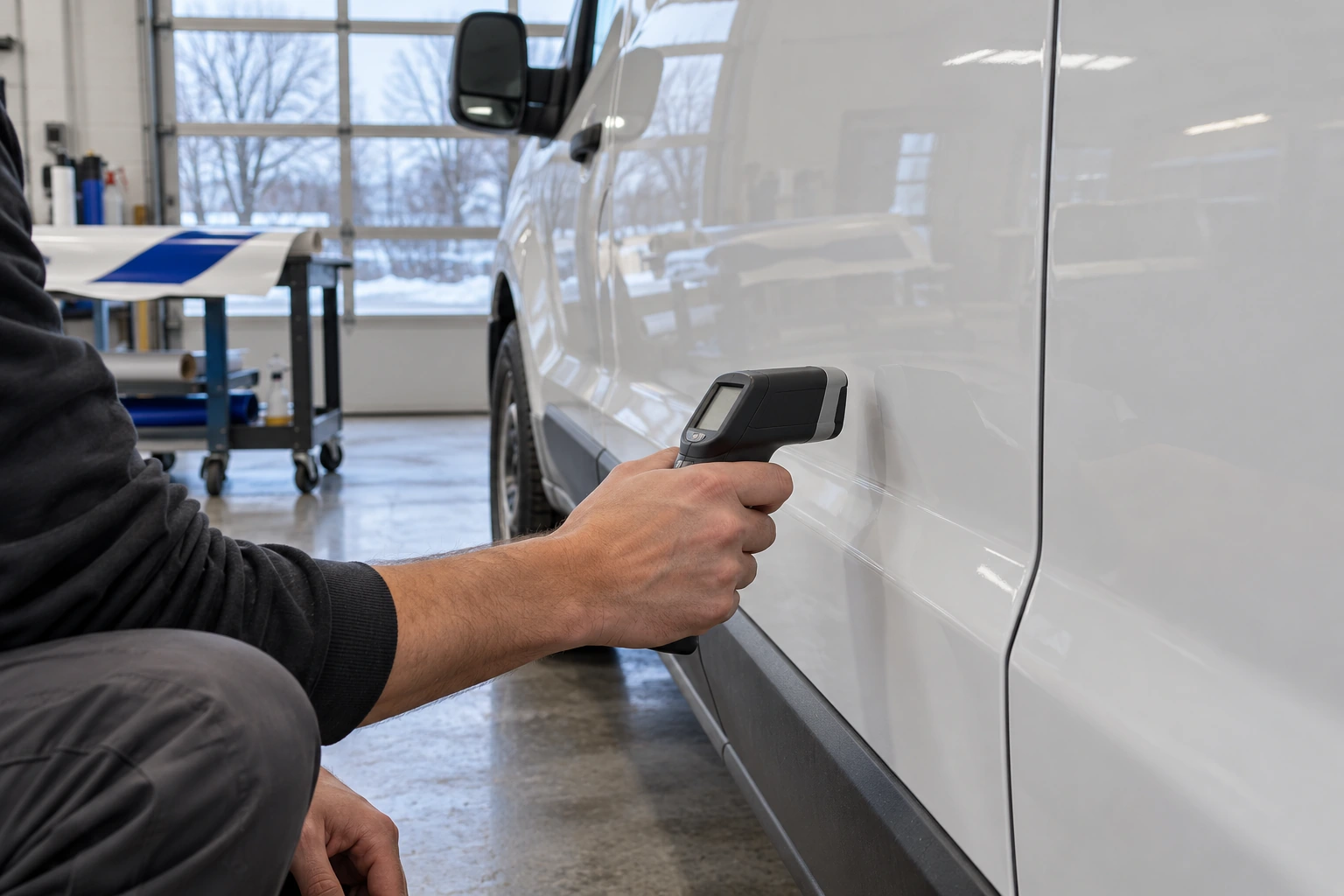
Featured image: AI-generated illustrative scene, not an actual customer job or measured temperature check. Use a suitable thermometer according to its instructions and record the application-surface conditions.
A cold-weather vinyl job should be decided at intake, before the installer arrives with a finished graphic. Ask where the substrate will be kept, which exact film is being used and whether the required conditions can be maintained after application. The afternoon forecast alone is an incomplete installation plan.
The goal is a clean, dry, suitable surface inside the product’s application range, with enough controlled time for the specified workflow. If that cannot be arranged, move the work indoors or change the appointment. A rushed outdoor install can turn a small scheduling problem into a replacement job.
Separate three temperature questions
Record the air temperature, the application-surface temperature and the condition of the film brought to the job. A vehicle that spent the night outdoors may need time in the installation space before its panels are ready. Likewise, bringing a cold roll through a warm doorway is not a reliable readiness test.
Use a suitable thermometer according to its instructions and measure several locations across the intended surface, including shaded areas and edges. Recheck during a long job or after the workspace conditions change. Treat these measurements as part of the job record, alongside the product name and the relevant technical bulletin.
Do not confuse the temperature a finished graphic can withstand in service with the temperature required to install it. For example, ORAFOL’s 651 data sheet lists both temperature resistance and a separate minimum application temperature. The existence of a sub-freezing service rating does not authorize a sub-freezing installation.
Read the exact product’s current guidance
Two manufacturer examples show why a generic rule such as “vinyl works above 50 degrees” is unsafe as a specification:
- ORACAL 651, Americas: its technical data sheet lists a minimum application temperature of 46°F. This is a minimum for that product, not the preferred condition for every ORAFOL film or every surface.
- 3M Wrap Film Series 2080: the September 2024 US product bulletin, which supersedes the July 2023 version, lists an application temperature of 65–75°F (18–24°C), dry application, and OEM vehicle paint as the substrate type. It also instructs users to bring the film to room temperature before use.
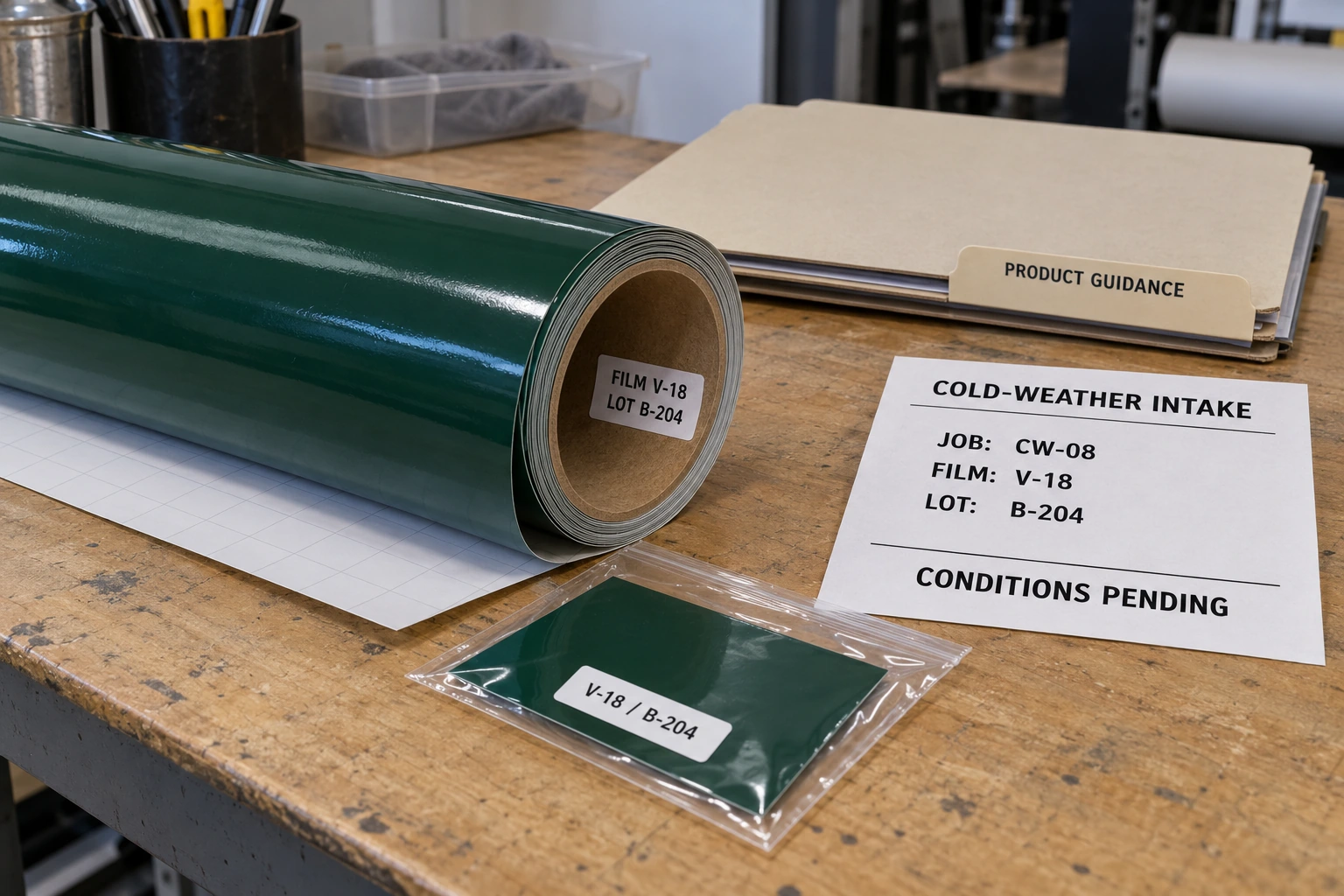
Older documents and pages from other regions can show different values. Save the applicable bulletin with the job and check its date, region, product suffix and intended substrate. If the seller’s short description conflicts with the manufacturer’s current instructions, resolve the discrepancy with technical support before promising an install.
ORAFOL’s general Americas support guidance recommends 65–75°F surface and ambient conditions for best results and says product-specific data sheets can provide exceptions to its general lower limit. This distinction between a minimum and a preferred working environment matters when estimating the job.
Use six questions before quoting the visit
- What is the surface? Record the material, coating, age, condition and whether it has been repainted or treated. Photograph existing damage with the customer’s permission.
- What is the geometry? Flat lettering, corrugations and a deep vehicle recess are different applications. Confirm that the chosen film and method suit the actual shape.
- What film system is specified? Include the exact vinyl, laminate where applicable, application tape and manufacturer instructions.
- Where can the object acclimate? Confirm indoor access, space, lighting, power and the time the customer can make the vehicle or panel available.
- How will the surface become clean and dry? Allow for washing, drying and final preparation rather than scheduling only the squeegee work.
- Where will the finished job stay? Confirm the post-install environment and the time before the customer needs it outside or in service.
A “yes” to having a garage is not enough. Ask whether it is heated, whether the entire item fits and whether it remains available through the required hold period. Put those assumptions in the quote so the customer understands why drop-off and collection times matter.
Make moisture a stop condition
In its December 2024 substrate-preparation bulletin, 3M identifies trapped moisture as a cause of premature graphic failure. Sources include incomplete drying, condensation and high humidity. Temperature compliance therefore does not replace surface preparation.
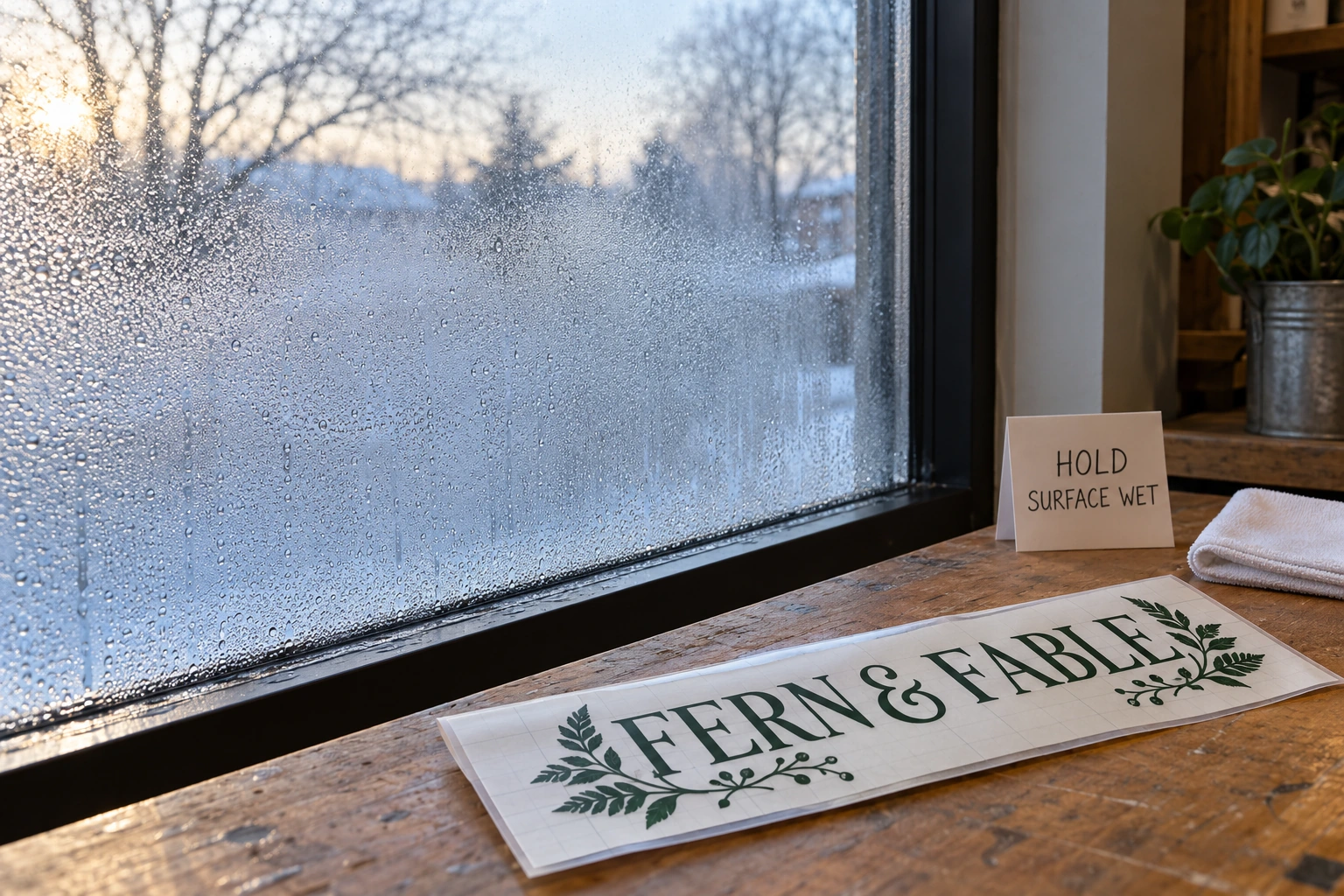
Inspect the surface after cleaning and acclimation. Do not work over frost, visible condensation or damp seams. Follow the product’s cleaning method and allow the required drying. A wet-application technique should only be used when the exact film and application instructions permit it; 2080’s bulletin specifically requires dry application.
A heat gun is a controlled installation tool, not a blanket permission to ignore ambient conditions or rush a cold substrate. Follow product-specific heating and post-heating instructions. Avoid improvised heaters, open flames or working around flammable cleaning vapors, and observe the equipment and chemical safety instructions.
Schedule the first day after installation
ORAFOL recommends keeping newly applied graphics in the application environment for at least 24 hours and avoiding a significant temperature change during that period. Apply this as ORAFOL guidance, not as a universal promise that every adhesive reaches full strength in one day. Other systems may specify different requirements.
Before releasing the job, inspect edges and difficult areas, record the conditions and provide the relevant care instructions. Keep a copy of the customer’s collection plan. If the job must immediately return to conditions outside the manufacturer’s guidance, resolve that conflict before installing.
The most reliable cold-weather adjustment may be an earlier drop-off, an indoor bay or a later appointment. Price and schedule those steps openly. They are part of delivering the graphic successfully.